
Clearwater Resident Lookup Sources
No single public roll lists every Clearwater resident. The best starting source depends on the fact that needs proof. Property records identify deeded owners, not every occupant. A voter record concerns one registered voter and may be suppressed. Court and probate indexes identify parties and events, but a filing is not proof that an allegation is true. Vital certificates confirm life events under Florida access rules. Business and license systems document public affiliations. A sound resident lookup treats each record as one piece of evidence.
| Record | What It Confirms | Where to Search | Access |
|---|---|---|---|
| Property roll | Owner, situs, mail, homestead clue | PCPA Quick Search | Free; ownership is not occupancy |
| Voter registration | Status, registration address, party, history | Pinellas Supervisor or state extract | Public split under §97.0585 |
| Court and probate | Party role, dates, name variants, possible heirs | Pinellas Clerk Court Records | Public web and counter; sealed data excluded |
| Vital records | Birth, death, marriage, dissolution facts | Florida DOH and Pinellas Clerk | Chapter 382 limits and copy fees |
| Business and licenses | Officer, agent, credential, status | Sunbiz and DBPR | Free; affiliation is not residence |
Use the owner roll first when a Clearwater address is known. Start with the court party search when a case number, probate matter, or filing date is known. Marriage and death paths help with family history, estates, and heir work. Sunbiz or DBPR is useful when the person is tied to a company or licensed trade. Each path has an online door, but older or non-web material may require a clerk counter, written request, library collection, or state archive.
Searching Clearwater Court Names
The Pinellas Clerk Court Records Search is the local name and docket route for Clearwater cases in Florida's Sixth Judicial Circuit. Search a party name in both normal and reversed order. Add a case category or date range to reduce common-name results. A known case number is the cleanest key, while a citation opens the traffic pathway. The dynamic portal can change labels, so use the controls currently shown rather than relying on an old field list.
| Search control | Input | How it helps |
|---|---|---|
| Court or case category | Tab or selection | Separates civil, criminal, traffic, family, and probate paths |
| Party name | Text | Finds possible parties; try variants and reversed order |
| Case number | Text | Retrieves a known matter directly |
| Date or filing range | Date pair | Narrows a common Clearwater name |
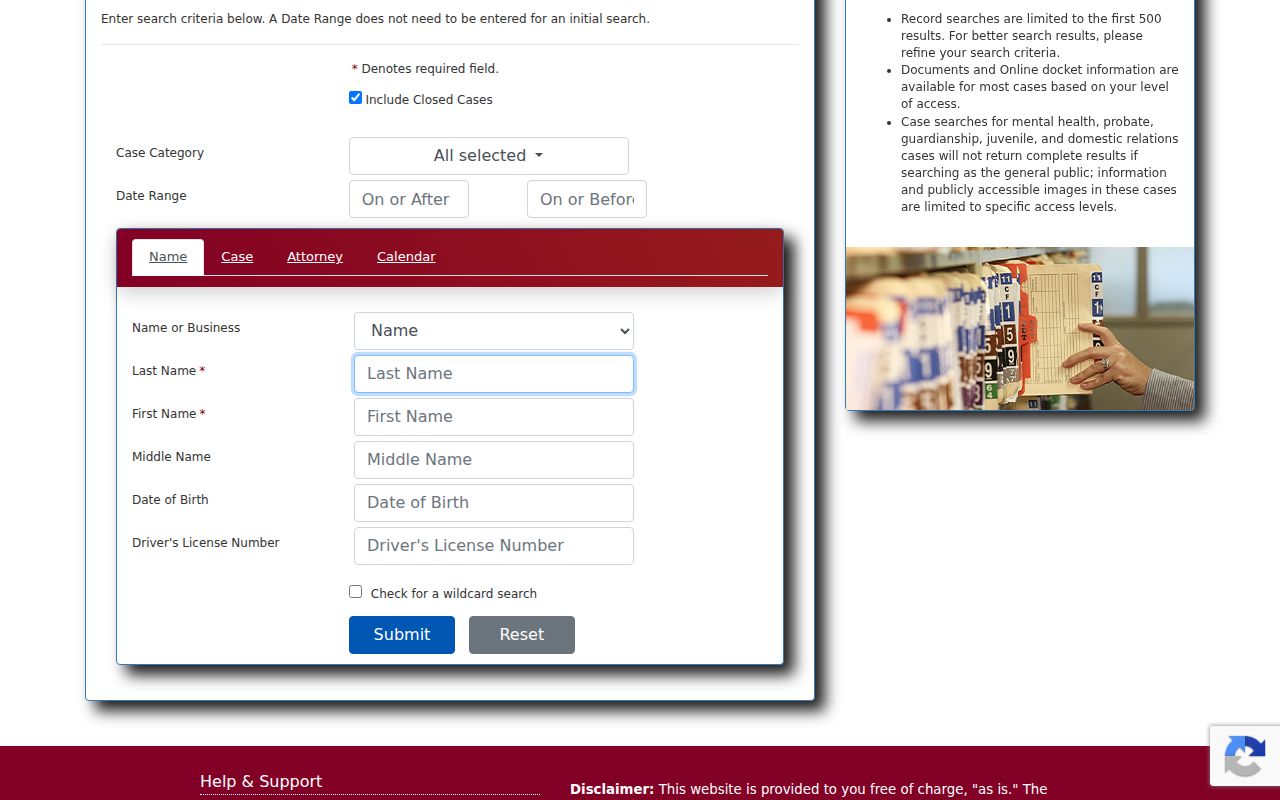
The captured search screen shows why names should be paired with dates and case categories before treating a result as a match. Civil files are handled at 315 Court Street, Room 170, and probate at Room 106. Many criminal matters are at the Justice Center on 49th Street North. Public terminals and Clerk staff are the fallback for public material not optimized online.
Reading Clearwater Resident Dockets
A court hit is a lead, not a verdict summary. Pinellas docket pages can show the case number, style or party names, category, event date, description, and a document link. Some filings open as PDFs. Others show that no document is available for public view. Confidential family, juvenile, adoption, sealed, and expunged material stays unavailable or redacted. Web omission does not prove an event never occurred.
- Compare the party role, not just the name.
- Match filing dates to the person's known timeline.
- Use an address on a public pleading only as corroboration.
- Check a linked judgment or parcel against an independent roll.
- Request the exact document and date when a certified copy is needed.
Federal Clearwater matters are separate. The PACER service covers the U.S. District Court for the Middle District of Florida and applies the current federal usage fees. The official PACER entry screen is shown below.
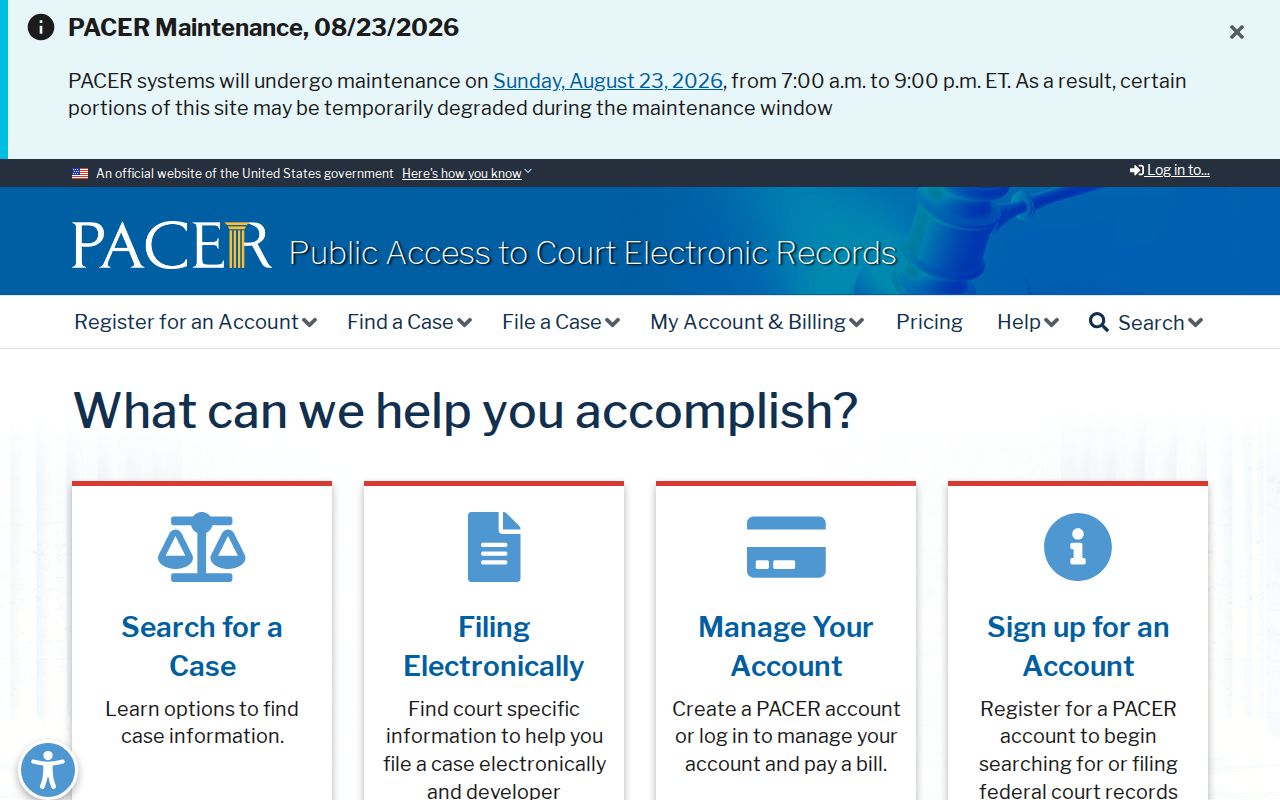
That division of custody prevents a false conclusion when no county case appears.
Confirming a Clearwater Name Match
Clearwater resident lookup errors often begin with a shared first and last name. Gather a middle initial or suffix, spouse or associate, filing dates, known occupation, and one parcel or business tie. Require two independent matches before saying two records concern the same person. An owner mailing address may belong to a company, representative, or post office box. A court party may have no current Clearwater connection.
Two-record rule. Match a stable detail across two official sources before joining records to one Clearwater resident.
Phone staff can explain how to obtain a record or confirm a case locator. They should not be expected to identify someone from vague facts. If a source has an error, use its own correction route: PCPA for parcel data, Recording Services for an indexing issue, the Supervisor for voter data, DOH for a vital amendment, or FDLE for a registry error.
Verify Clearwater Resident Records
Begin with the source closest to the known fact, then cross-check a different custodian. PCPA can tie a deeded owner to a situs and mailing address, though neither proves a full household. The voter lookup can confirm an individual's status when the required identity details match. Court, probate, marriage, and death records can then test the same name against dates and relationships. Certified copies come from the custodian, not from a search-result page.
- Anchor the name to a Clearwater address through PCPA owner search or the person's voter-status lookup.
- Search the Pinellas court portal with the name, variants, category, and a narrow date range.
- Confirm a life event through the proper marriage, death, or dissolution custodian and its access rule.
- Order a certified copy only when an authenticated office copy is needed.
- Docket
- The court's dated list of filings and events in a case.
- Index vs image
- An index points to a record; an image shows the filed page and may have tighter access.
- Certified copy
- An official copy bearing the custodian's authentication.
Clearwater Vital Record Paths
Florida uses four distinct doors. DOH-Pinellas issues local birth and death certificates, while the state Bureau of Vital Statistics handles statewide records. The Pinellas Clerk records marriage licenses and keeps divorce case files. State dissolution certificates are abstracts, not full court files. There is no verified complete public Pinellas birth or death name index, so certificate forms, historic Clerk books, library databases, newspapers, and State Archives material supply the fallback chain.
The Florida vital records hub explains statewide ordering channels. Births under 125 years are confidential and limited to eligible people. Any adult can obtain a death record without cause; cause-of-death information remains limited for 50 years. Marriage records are public, and a very recent ceremony may still be with the issuing Clerk.
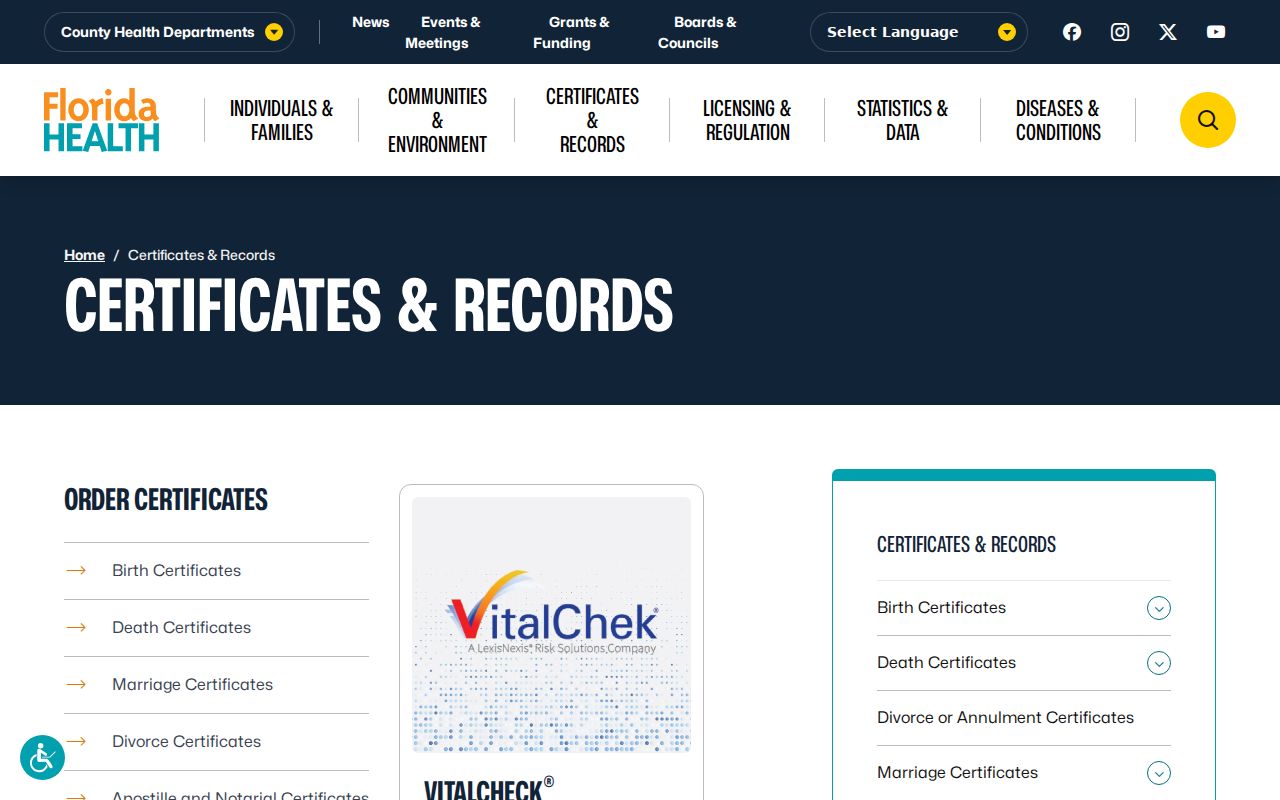
The state page separates each certificate type and points to mail, walk-in, and online ordering. Historical substitutes matter when a certificate is restricted or predates modern statewide coverage.
Finding Clearwater Heirs and Classmates
An heir search can begin with a decedent's Pinellas probate docket, public petition or will, personal representative, and recorded property transfers. Verify every possible heir address in a separate official source. Adoption and birth-parent research must use Florida's confidential registry and statutory process. Sealed original birth records are not open to public inference.
Former classmates have a different trail. Clearwater's Aqua Clara yearbooks begin with selected volumes from 1916, and Clearwater Sun newspapers can bridge later years. The Main Library accepts a free obituary or research request for a deceased person when a death date is supplied. Each person or entity may submit up to three requests per year; staff search the following week, and a response may take up to six weeks.
The Florida birth certificate page sets out eligibility, identification, and ordering channels. 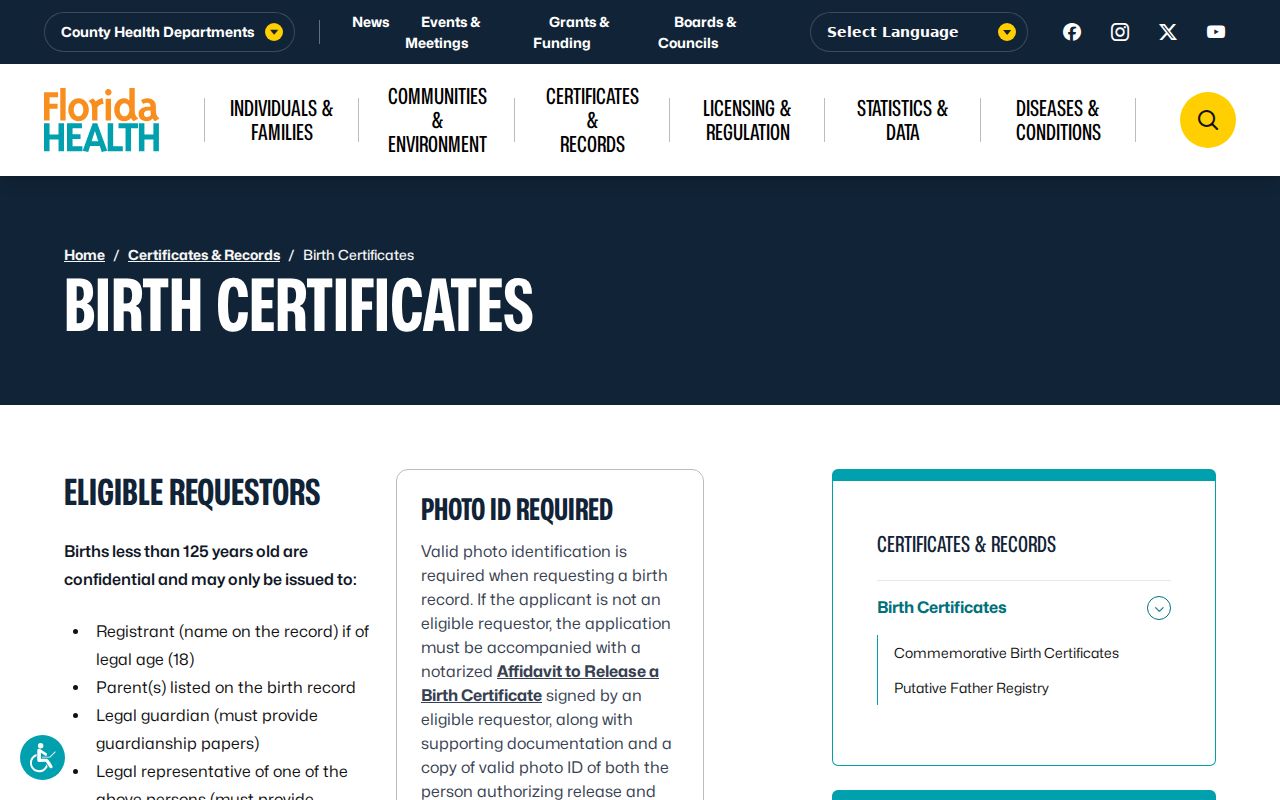
The captured page reinforces that restricted family records require the official process, even when other public records reveal related names.
Checking Clearwater Business Ties
Sunbiz can search a known person as an officer or registered agent. Entity pages may show status, principal and mailing addresses, officers or managers, and annual-report images. A registered-agent address may be a lawyer or service company, so it is not home proof. Clearwater business-tax records and PCPA tangible-property accounts can add a local business address. DBPR then confirms licenses that fall under its boards, including status and public location or discipline where shown.
This path works for verifying a seller, tracing an estate asset, or confirming a claimed public business role. It does not replace a residence record. Health professionals, attorneys, educators, and some other fields use separate official boards. Match the credential number and current status, then return to property, voter, or court records if the question is where the person is tied to Clearwater.
Limits on Clearwater Resident Lookup
Florida has no single erasure request that removes lawful deeds, dockets, and assessment rolls. Each office applies its own statute. The Address Confidentiality Program provides a substitute address to eligible victims, and listed high-risk professionals may seek field suppression under section 119.071. Voter files always withhold Social Security, driver-license or state-ID numbers, and registration source. Signatures may be viewed but not copied. DMV personal data has separate federal protection.
A missing result can mean a protected address, a renter absent from owner rolls, no registration, a confidential record, or an older paper file. Do not fill that gap by guessing. Under the Florida Public Records Act, a narrow request can describe a nonexempt record without stating a reason or using a special form. The custodian may charge lawful copy or extensive-service costs, and confidential data remains closed.
Lawful use. A Clearwater resident lookup supports lawful personal research. Never use a record to stalk, harass, intimidate, or expose protected people.