
Clearwater Previous-Resident Sources
No single roll identifies every past resident of a Clearwater address. The Pinellas County Property Appraiser supplies the current parcel, deed links, owner mailing address, legal description, and sales history. The Clerk's Official Records then carries the ownership chain. Polk street sections, the public federal census, Clearwater Sun files, and library collections can identify occupants who never held title. Start with the source closest to the date being researched, then use a second record to test the match.
| Source | Years It Covers | Where Held | What It Shows |
|---|---|---|---|
| PCPA roll and sales | Current, plus parcel sales shown | Property Appraiser | Owner, mailing address, legal description, deed links |
| Official Records | Online cutoff not officially published | Pinellas Clerk | Grantors, grantees, dates, instruments, title chain |
| Digitized Polk directories | Selected editions, 1914-1979 | Internet Archive and library | Listed occupants and businesses by name or address |
| Federal census | Decennial schedules through 1950 public | NARA and library databases | Household members, relationships, ages, birthplaces |
| Clearwater Sun | 1925-1989 microfilm | Clearwater Main Library | Moves, sales, obituaries, and social notices |
For a recent transfer, start at the parcel record. For a mid-century household, begin with the closest Polk volume and check the census decade. An older gap may require the Clerk counter, predecessor Hillsborough County material for dates before Pinellas County was created, or help from the Heritage Studio. A directory hit is a lead, not proof that every household member was listed.
Clearwater Parcels Open Deed Trails
The PCPA Quick Search is the cleanest doorway when only an address is known. Save the 18-digit STRAP parcel key, the situs address, full legal description, current owner, tax district, Last Recorded Deed, and Sales History. Situs means where the land lies; an owner mailing address can point somewhere else. The stable legal description and STRAP are more useful than a street label when names or boundaries have changed.
PCPA Sales History book-and-page links can jump from a parcel to the Clerk deed. That shortcut is especially useful for previous-resident research because the Clerk index is based on parties and recording data, not a dependable address field. Keep the parcel page open while comparing deeds.
Quick Search accepts an address or street name, owner, parcel ID, subdivision or condominium, and official-record book/page. Less text often returns a better address match. If the live result does not supply an older assessment, ask PCPA for a historical snapshot with the STRAP and tax year. The courthouse office at 315 Court Street is open on weekdays during the published office schedule, and staff can also be reached at 727-464-3207. Those channels keep an incomplete portal result from ending the search.
Note: A Clearwater postal address does not prove city jurisdiction, so record the PCPA tax district along with the parcel identity.
Walk Pinellas Deeds Backward
A chain of title is the linked sequence of recorded ownership transfers. Use the Pinellas Clerk Official Records after PCPA identifies the latest instrument. Each matched deed should repeat the parcel's legal description even when the street address is absent. Names alone are weak evidence, especially for common surnames.
- Pull the current owner, STRAP, legal description, and last-deed reference from PCPA.
- Open the acquisition deed and note each buyer, seller, execution date, recording date, document number, and book/page.
- Search the seller as an earlier grantee. Match the legal description before accepting the transfer.
- Repeat the grantee-to-grantor handoff until the online index no longer gives a reliable match.
- For earlier books, contact Recording Services in Room 150 at 315 Court Street, call 727-464-4876, or email recording@pinellascounty.org.
- Grantor / grantee
- The grantor transfers an interest; the grantee receives it.
- Chain of title
- The linked run of deeds showing ownership backward through time.
- Legal description
- The recorded lot, block, subdivision, or survey identity that remains useful when a street address changes.
The Clerk has not published an exact online cutoff in the accessible official material. Do not guess. A written fallback should provide book/page, document number, party, approximate year, and whether an informational or certified copy is needed. Historical deed books and local microfilm can continue the trail where web results stop.
Map the Earlier Clearwater House
Ownership names do not show when a structure appeared or changed. Clearwater permits can date additions and other work, though the researched portal does not publish a verified start year. Sanborn fire-insurance maps may show a building footprint, use, construction details, or an older street label. No verified list of Clearwater Sanborn editions or citywide renumbering year was found, so search the Library of Congress Sanborn guide and local catalogs without assuming a map exists for every year.
The source image below shows the official Sanborn search guidance. It helps researchers choose a place and date before opening a sheet.
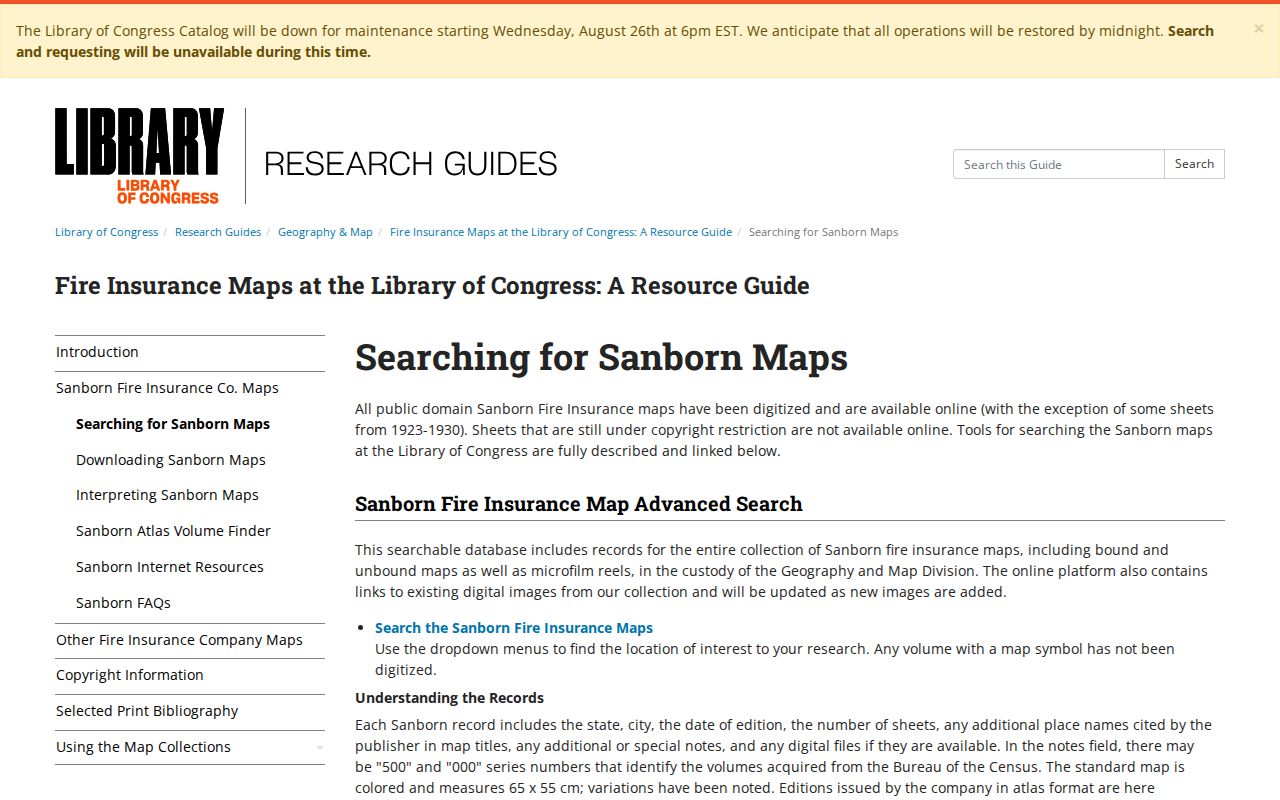
Use a map as physical context, then return to deeds and directories for names. A footprint does not establish who lived there.
Clearwater Records Cross 1912
Pinellas County was created from Hillsborough County in 1912. That boundary in record keeping matters when a Clearwater deed, court entry, or vital clue predates the new county. Some older books may be predecessor records or transferred material rather than a missing entry. Clearwater incorporated as a city in 1915, while the earliest verified joint Polk directory in the local digital run dates to 1914.
Follow the place and legal description, not just the modern county name. State Archives catalogs, local microfilm, and the Clerk counter can help identify the correct series. The Florida records-management statutes page provides the source shown below for understanding public record retention.
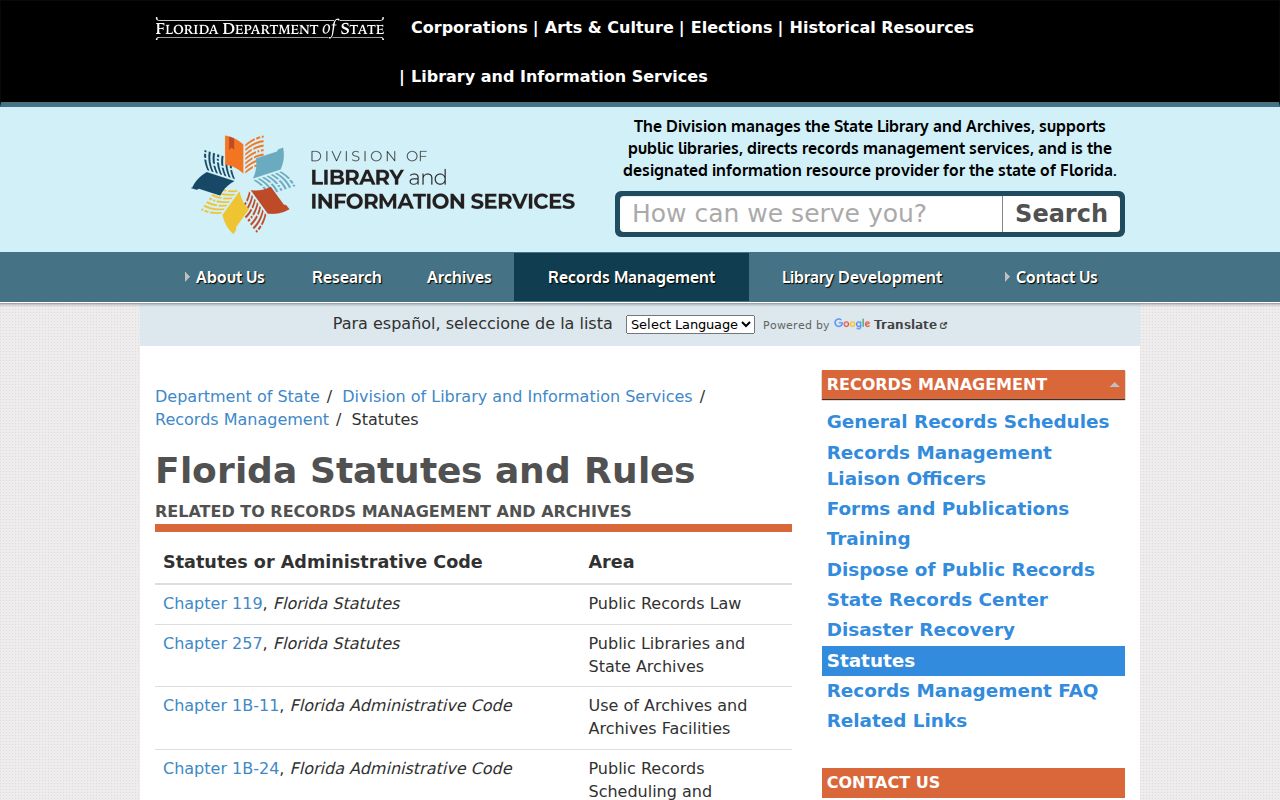
The state resource explains the legal framework, but the relevant custodian still determines which historical series survives and how it can be accessed.
Clearwater Sun Adds Human Detail
The Clearwater Sun began in 1914 and ended in 1989. Main Library microfilm spans 1925 through 1989, and its photo archive holds more than 60,000 prints and negatives. Property sales, obituaries, club news, school items, and social notices can connect a deeded owner to other people at the same place. Newspaper text is supporting evidence because a notice can contain an old address, misspelling, or informal name.
Search a surname, street, subdivision, and close relatives around each transfer date. WPA Pinellas newspaper indexes and Pinellas Memory can supply leads when OCR misses a scan. Record the newspaper title, issue date, page, and wording so another researcher can retrace the find.
Community sources can correct gaps in mainstream listings. The Christine Wigfall Morris collection at North Greenwood Library contains more than 4,300 items focused on African American history, literature, and media. Clearwater Colored Cemeteries Society research addresses erased historic burial sites and descendant connections. A past Clearwater resident missing from a Polk volume may still appear in a church item, school file, cemetery project, segregated-era newspaper, estate, or deed. Respect donor limits and distinguish a community memory from a recorded legal fact.
Match Clearwater Households by Year
Deeds identify owners, not every person at the home. Polk criss-cross sections reverse the usual city directory: look under the street and scan house numbers for a listed occupant or business. The Clearwater Library's verified digitized selection includes 36 editions from 1914 through 1979, but it is not continuous and the titles often combine Clearwater with nearby communities. The collection details belong on the Clearwater city directory page.
- Choose the closest available directory year and record the exact street heading, number, name, edition, and page.
- Check one volume before and after to separate a move from a missed canvass or title-scope change.
- Pair 1940 or 1950 directory entries with the matching public census schedule, using household names and neighbors to confirm the address.
- Use Clearwater Sun notices, probate, cemetery sources, or an obituary to explain a disappearance.
The Clearwater Main Library accepts a free Obituary or Research Request for a deceased person. It requires a death date, searches only the following week, permits three requests per year per person or entity, and may take up to six weeks.
The official request page shown below is a practical fallback for previous residents who appear in a directory but vanish before the next available volume.
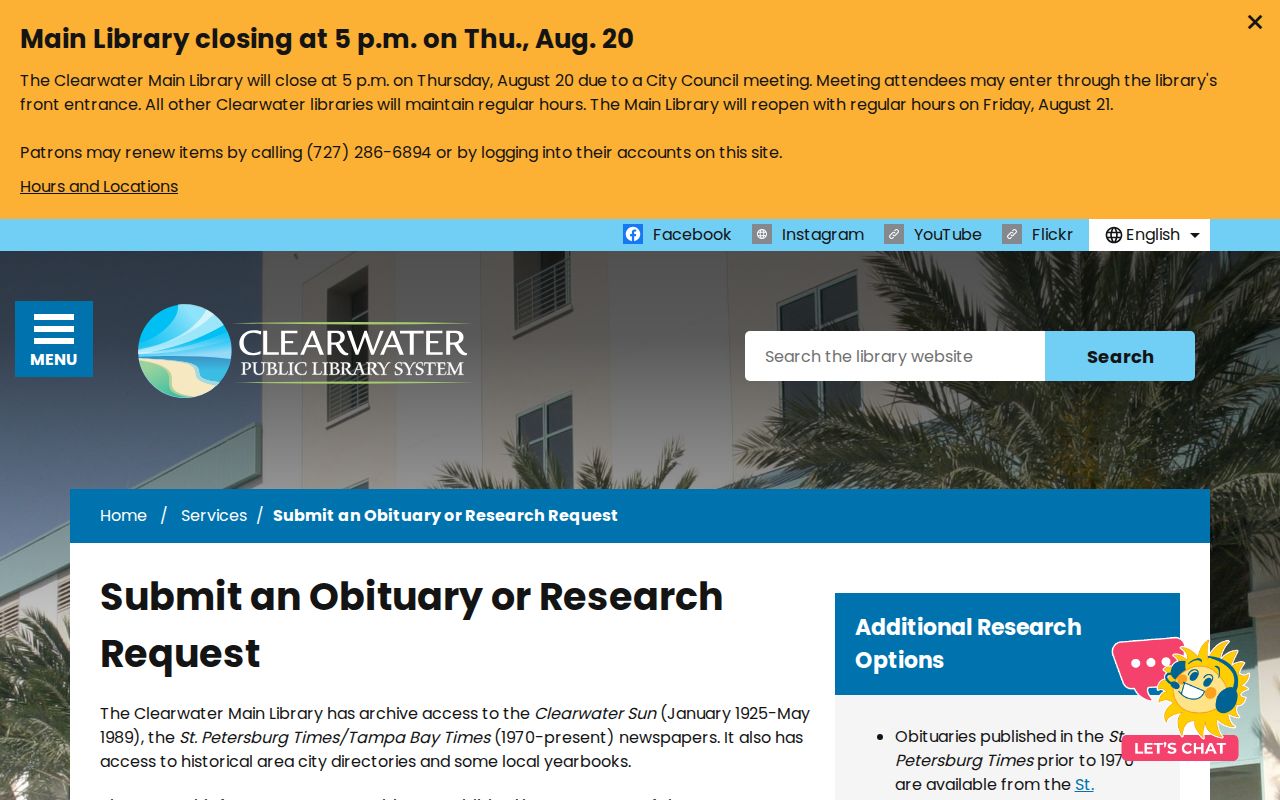
Library staff may find an obituary or local source, but the result should still be paired with the correct deed, directory page, probate file, or death record.
Lawful use. Research Clearwater previous residents for house history, genealogy, or estate work. Never use a record trail to track, threaten, or harass a living person.
Close Clearwater Resident Trails Carefully
A death certificate, obituary, or probate case can explain why a name leaves an address, but these records have different rules. The Pinellas Clerk holds probate files. Florida's Bureau of Vital Statistics and DOH-Pinellas handle death certificates. Any adult may obtain death information without cause of death; cause is restricted for deaths less than 50 years old unless the requester qualifies. Clerk books, church records, and State Archives materials can help with older cases.
The Florida vital-records forms page is the source for the applications and options pictured below.
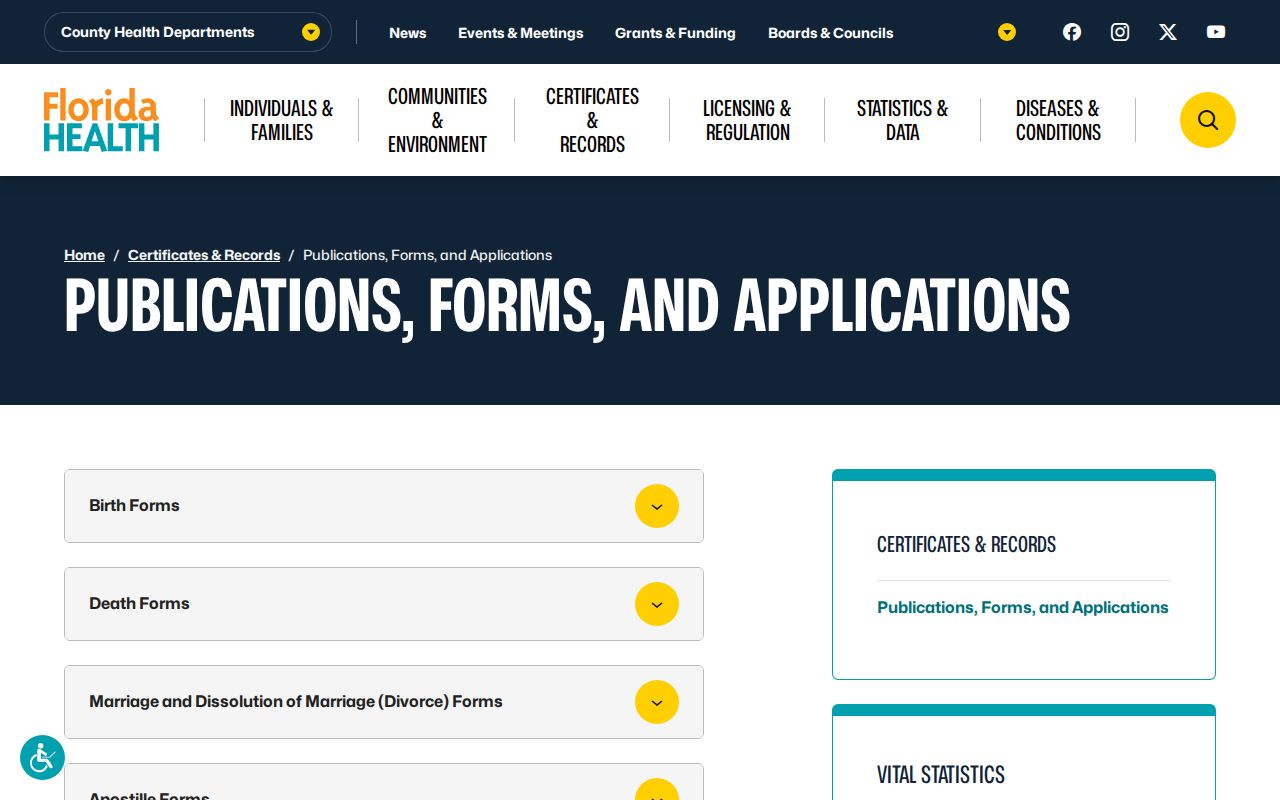
Use the certificate channel only when the eligibility rule fits. A public-records request cannot override confidentiality in Florida vital-records law.