
Clearwater Directory Collections by Year
R.L. Polk is the main publisher in Clearwater's verified digital run. The Clearwater Library Internet Archive collection contains 36 verified volumes or editions from 1914 through 1979, with gaps. The physical city directory shelf at the Main Library may be broader, but its full year run is not published online. Companion sources fill missing years and add voices that the commercial canvass did not capture.
| Collection | Years | Where Held | Access |
|---|---|---|---|
| Polk Clearwater directories | Selected 1914–1979, 36 editions | Internet Archive / Clearwater Library | Free search and page images |
| Physical city directories | Broader area holdings; exact run unpublished | Main Library Heritage Studio | On-site; ask staff |
| Aqua Clara yearbooks | From 1916, selected volumes | Internet Archive / library | Free selected scans |
| Clearwater Sun | Published 1914–1989; microfilm 1925–1989 | Main Library / Pinellas Memory | On-site and growing online set |
| WPA newspaper indexes | Historic subject indexes | Internet Archive / library | Free selected volumes |
The verified Polk years are 1914; 1920–21; 1924–25; 1926; 1931; 1937; 1939; 1941; 1944; 1947; 1950; 1952; each year from 1954 through 1971; then 1973 through 1977 and 1979. No separate 1972 volume was located. A gap in this list is not proof that no physical copy exists.
Clearwater's record timeline explains part of the shelf. Pinellas County was created from Hillsborough County in 1912, the city incorporated in 1915, and the verified directory record begins with a joint regional volume in 1914. As the city grew from its old core toward beach, island, and inland communities, Polk titles expanded and contracted. Publication geography therefore matters as much as publication date. A search for an early family may require a Clearwater section in a regional book, while a later address may sit in a combined Clearwater, Dunedin, and Largo edition.
Browse Clearwater Directories Online
Digitized volumes live in the Clearwater Library collection on Internet Archive. Search OCR for a surname, but verify every hit on the page image. Old type, initials, narrow columns, and scan quality can split or distort names. Record the full title, year, publisher, page, and the section where the entry appears.
The local-history collection page points to the city's physical holdings and selected online city directories.
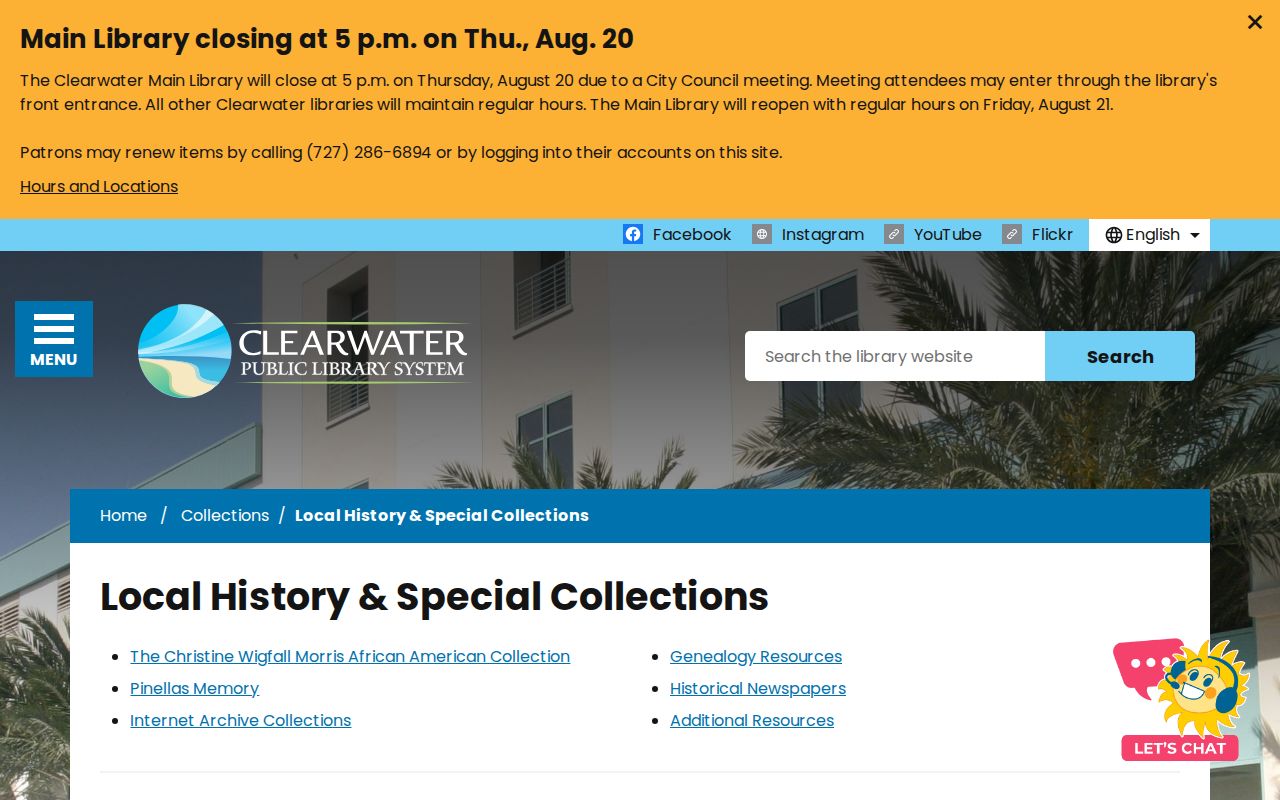
When OCR misses a person, browse the alphabetical pages, then inspect the street section and adjoining locality sections. Initials and spouse names can recover an entry that a full-name query misses.
Clearwater Directory Titles Shift
A volume's title defines where to look. The 1914 edition combines St. Petersburg, Clearwater, and vicinity. The 1920–21 edition includes Belleair, Dunedin, Largo, Ozona, Safety Harbor, and Sutherland. A 1926 Pinellas County title expands to more communities, while many mid-century editions join Clearwater, Dunedin, and Largo and include Clearwater Beach or Belleair.
This changing scope can make a resident seem absent. Search the locality dividers, street index, and nearby-city sections before concluding that a household moved. Clearwater's annexation and postal geography also changed which label a publisher used. Directory titles are evidence about the canvass, not fixed municipal boundaries.
Note: Keep the title page with every citation because “Clearwater” may describe only one section of a multi-city volume.
Decode a Clearwater Directory Entry
Begin with the abbreviation key in that exact volume. A typical Polk entry is arranged by surname, given name or initial, spouse in parentheses, occupation or employer, and home address. The letter “h” commonly introduces the home address. Widow, resident, boarder, or homeowner indicators vary, so meanings should not be carried from one decade into another without checking.
| Name | Alphabetical surname with given name or initial; spouse often follows in parentheses |
|---|---|
| Work | Occupation, employer, or business address when supplied |
| Home | House number and street, often introduced by “h” |
| Status mark | Edition-specific owner, renter, resident, or boarder sign |
| Widow notation | “wid” plus a spouse's name, a lead for death and probate research |
- Criss-cross directory
- A reverse section arranged by street and house number, sometimes with cross streets or vacant-lot marks.
- Householder index
- An index focused on the listed person at a home rather than every household member.
- Abbreviation key
- The volume's own legend for shortened words and symbols; save it before interpreting an entry.
An address entry is a dated lead, not proof that every family member lived there for the whole year. The publisher may have missed unlisted people or seasonal residents.
Reverse Clearwater Streets and Houses
Later city directories often include a street-order section. Locate the street heading, then scan house numbers in sequence for an occupant or business. Cross streets and vacant or new-construction marks may help place the block. This reverse path is useful when a family surname is unknown or OCR has failed.
Street text can change, so compare the same house with plats, maps, or a stable parcel legal description. The modern address-keyed chain belongs on the Clearwater street directory page. Historical work should stay anchored to the publication year and the directory's own geographic scope.
Clearwater Heritage Studio Access
The Heritage Studio of Community Memory is on the fourth floor of Clearwater Main Library, 100 N. Osceola Avenue. Listed hours are Monday through Thursday, 10 a.m. to 5 p.m., and Friday, noon to 4:30 p.m.; weekends are closed and reservations are recommended. Call 727-562-4970 or email studios.main@myclearwater.com before a research visit.
Staff can connect city directory questions with microfilm, maps, community collections, photographs, and scanning equipment. Large-format newspaper, book, and map scanning is available, as are photo, film, video, and audio digitization services. Ask about the physical shelf when an edition is absent online.
A written fallback is the library's free Obituary or Research Request. It requires a death date, searches only the following week, is capped at three requests per year per person or entity, and may take up to six weeks.
Clearwater Sun Bridges Missing Years
The Clearwater Sun published from May 1, 1914, through July 27, 1989. Main Library microfilm covers January 1925 through May 1989. News items, obituaries, property sales, school news, and social notices can explain why a name drops from one directory year and returns under another spelling or address.
Pinellas Memory brings together digital material from Clearwater and other Pinellas libraries.
The Clearwater Sun archive also holds more than 60,000 photographic prints and negatives, with selected items online. WPA Pinellas newspaper subject indexes survive as a useful local finding aid when full-text search is weak.
Clearwater Community Memory Adds Names
Mainstream city directories do not represent every Clearwater community equally. Christine Wigfall Morris became the city's first African American librarian in 1949, helped open the Negro Library storefront in 1950, and began voter-registration work. The North Greenwood Library collection named for her now holds more than 4,300 African American history, literature, and media items.
That collection, Clearwater Colored Cemeteries Society descendant research, church material, newspapers, and family collections can restore people missed by a Polk canvass. Aqua Clara yearbooks, available in selected volumes from 1916, add classmates and school ties. Donor restrictions and privacy limits still govern community archives.
The Pinellas Genealogy Society at Largo Public Library adds classes, cemetery indexes, databases, print sources, and in-person research help. Ancestry Library Edition is available in the library with a PPLC card for on-site use, while Fold3 supports military research. These companions are most useful when they confirm a date, relationship, school, burial, or service record suggested by a city directory rather than replacing the original entry.
Extend Clearwater Research Statewide
The State Library of Florida city directory collection spans the early 1900s to the present and is arranged by city and year. It is a strong fallback for editions missing from Clearwater's digital shelf.
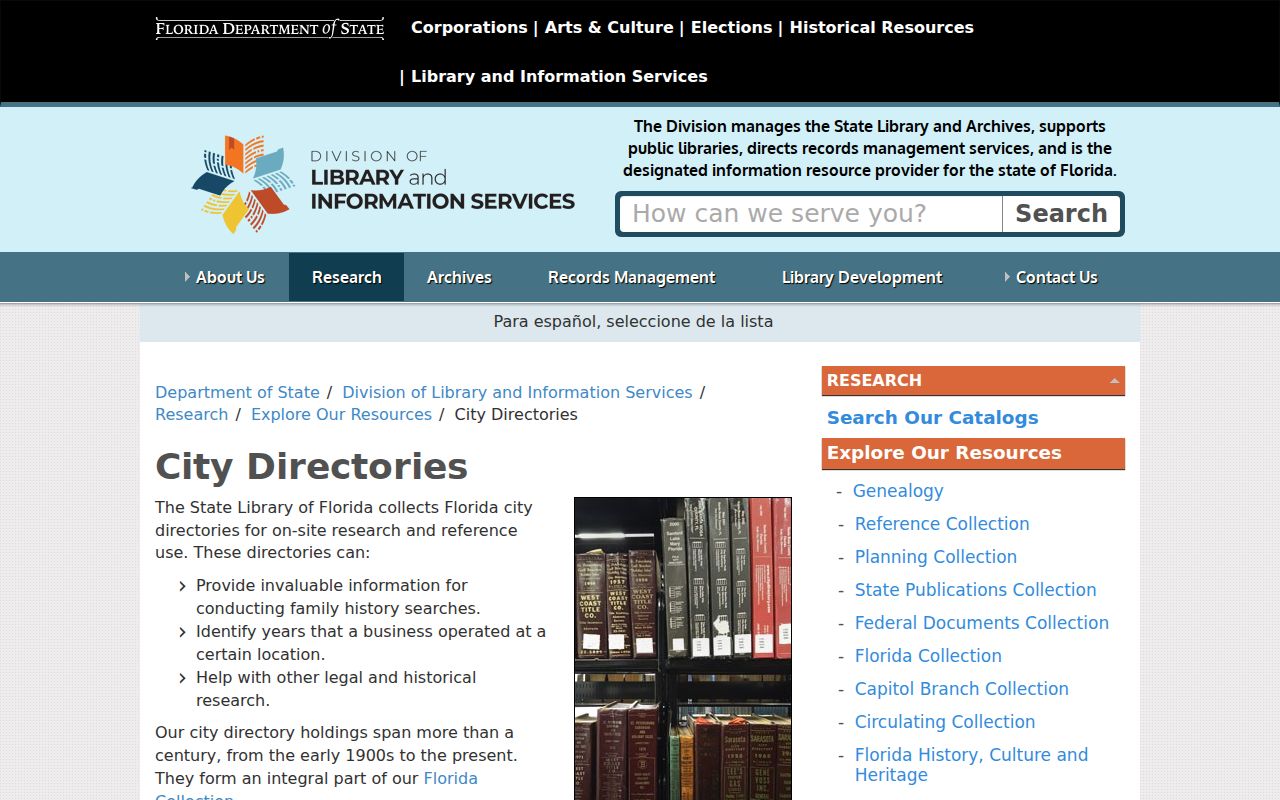
The State Archives collection guide shows the broader manuscript, photograph, and local-government materials that can support a directory trail.
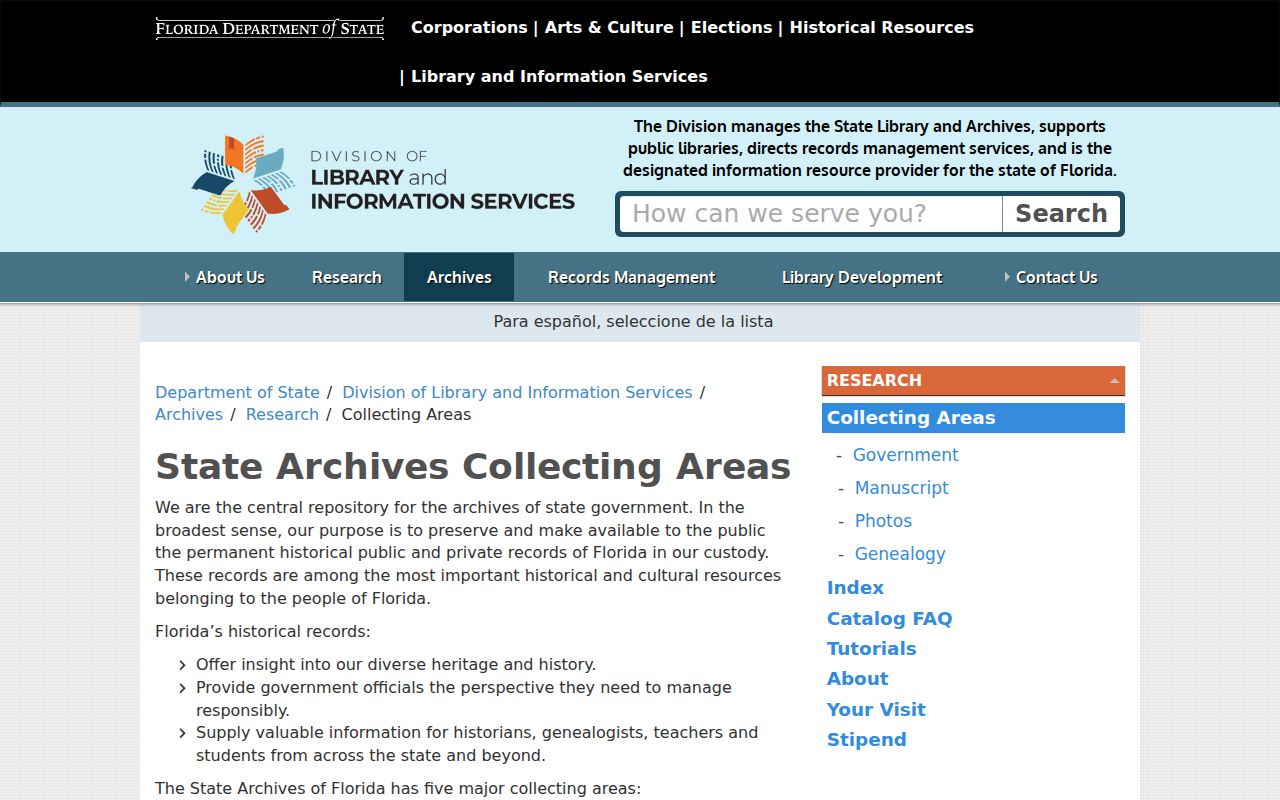
The State Archives collecting areas also cover state and local government records, private manuscripts, photographs, and genealogy collections. Before 1912, Clearwater land or court research may lead to Hillsborough County because Pinellas had not yet been created.
Trace Clearwater Families Across Volumes
Start in a year when the person's name or address is known. Save the exact spelling, initials, spouse, work, address, title geography, and page. Move one available volume at a time. A disappearance may mean death, a move, a missed canvass, a renamed street, annexation, or a change in which nearby communities the publisher included.
- Find the person in the alphabetical section and photograph the abbreviation key plus the entry page.
- Move backward and forward through each available year, logging changes in spouse, work, and address.
- Check the reverse street section for another household name, a business, or nearby addresses.
- Pair 1940 and 1950 directory evidence with the corresponding federal census schedules. As of 2026, 1950 is the latest public personally identifiable census.
- Bridge a disappearance with Clearwater Sun notices, an obituary request, probate, deeds, cemetery records, or a yearbook.
Use two sources before making an identity claim. A spouse name, occupation, or unchanged street address can separate people with the same name. A probate file or obituary may explain a final entry, while a later deed can follow an heir. Modern verification belongs to the Clearwater resident lookup process rather than the historical shelf.
| 1914 | Earliest verified digitized joint St. Petersburg–Clearwater volume |
|---|---|
| 1926 | Directory title expands to Clearwater and Pinellas County |
| 1950s–1970s | Dense Polk run, often combining Clearwater, Dunedin, and Largo |
| 1979 | Latest verified edition in the digitized Clearwater selection |
Note: Directory absence is a prompt to change sources, not proof that a person left Clearwater.