
Clearwater Neighbors by Block
Public sources answer different questions about a Clearwater block. The parcel viewer establishes which lots touch. The assessment roll names deeded owners and separates the situs, or land location, from the owner's mailing address. Voter files may identify nonsuppressed registered voters, while city permits show work tied to an address. Historical Polk street sections arrange listed occupants in house-number order. None of these sources alone proves the current makeup of a household.
| Source | What It Shows About a Block | Access |
|---|---|---|
| PCPA GIS and Quick Search | Adjacent parcels, owners, situs and mailing addresses, legal descriptions | Free online |
| Public voter extract | Registered voters at nonsuppressed addresses | State or county request under Florida law |
| Clearwater Accela | Permits, property work, cases, applicants, and business records | No-login search |
| City association map | Association boundaries and public contacts, not member rosters | Public city map |
| Historical Polk street sections | Listed occupants and businesses in address order | Digitized or library access |
An owner's mailing address can be a post office box or another city. It should never be reported as though that person occupies the Clearwater parcel. A homestead indicator may support owner occupancy, but the roll still does not list all people at the home. State voter data also omits nonvoters and protected registrants. Label every result by source and date.
Keep a simple block worksheet with one row per parcel. Record the STRAP, situs, deeded owner, separate owner-mail destination, tax district, and source date. Add voter, permit, or association information in its own columns only when the access rules allow it. This prevents a business contact, contractor, registered agent, or out-of-town deeded owner from being mislabeled as a Clearwater neighbor. It also makes later corrections easy when a parcel transfers or a city record changes.
Click Around a Clearwater Parcel
The PCPA Parcel Viewer is parcel-centric, not a resident-radius tool. Search the target address and center its red boundary. Clicking a parcel without the red boundary changes the detail to that parcel. Repeat on both sides, across the street, and behind the lot where the map shows a shared edge. Filled Parcel, aerial, and countywide plan styles help make those relationships clear; Measure can check distance or area.
- Search and confirm the target by situs address, STRAP, and legal description.
- Click each touching or facing parcel and record its parcel key and owner.
- Open the roll to compare situs, owner mailing address, homestead information, and last deed.
- Keep uncertain owner-occupancy separate from confirmed public facts.
- For every parcel on a named road, use the Clearwater street directory workflow instead.
There is no verified radius-owner export. A careful block list must therefore come from parcel clicks or street-name results, not an invented buffer search.
Florida Voter Data on Blocks
Florida law makes several voter-registration fields public, including name, residence address, date of birth, party, phone or email, status data, and participation history. Ballot choices are never public. Social Security numbers, driver-license or state-ID numbers, and registration source are confidential. A signature may be viewed but not copied. Address Confidentiality Program participants and qualifying high-risk professionals can have location information withheld.
The individual lookup is built for a voter to check a known registration, not browse every Clearwater neighbor. Broader public data comes through the Florida voter extract request or the Pinellas Supervisor. The statewide request screen shown below documents that route.
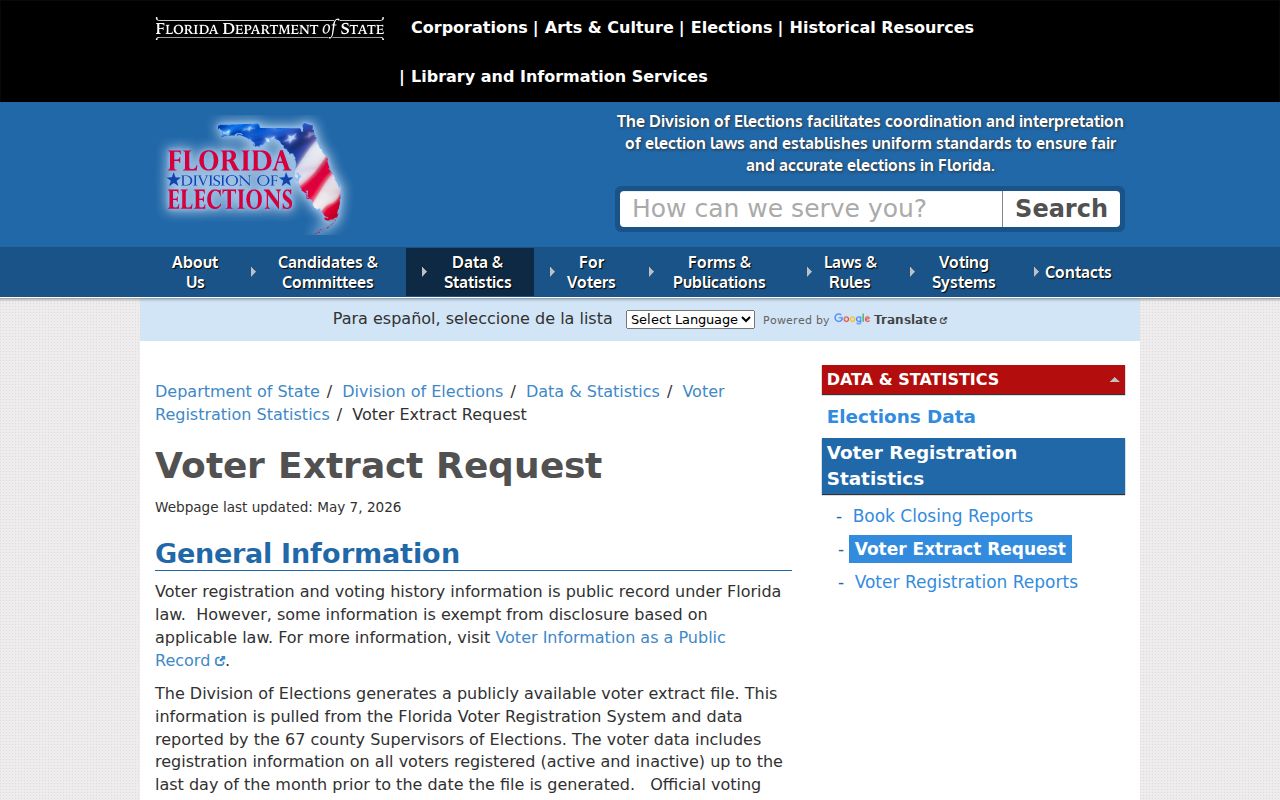
A missing name can mean no registration, a spelling issue, a move, or protected status. Never reconstruct information that the custodian suppressed.
The Pinellas Supervisor of Elections is the county contact for current voter-service questions.
The county page should be used for official help, not as proof that every person at an address is registered.
Clearwater Neighborhood Groups
Clearwater Neighborhood Services maintains a public association map and registration process, with contacts divided west and east of Keene Road. The map identifies civic coverage, not who lives in each home. Local groups surfaced in the research include Island Estates Civic Association, Coachman Ridge Neighborhood Association, Clearwater Beach Association, Edgewater Drive Neighborhood Association, Plaza Park Neighborhood Association, and Spring Branch Neighborhood and Park Association.
City Neighborhood Services
Public association boundaries, city contacts, and group registration.
Island Estates
A civic association organized in 1962, historically reporting more than 700 members.
Coachman Ridge
A voluntary association that historically published a directory and newsletter.
The city neighborhood page pictured below is the proper doorway to current public contacts.
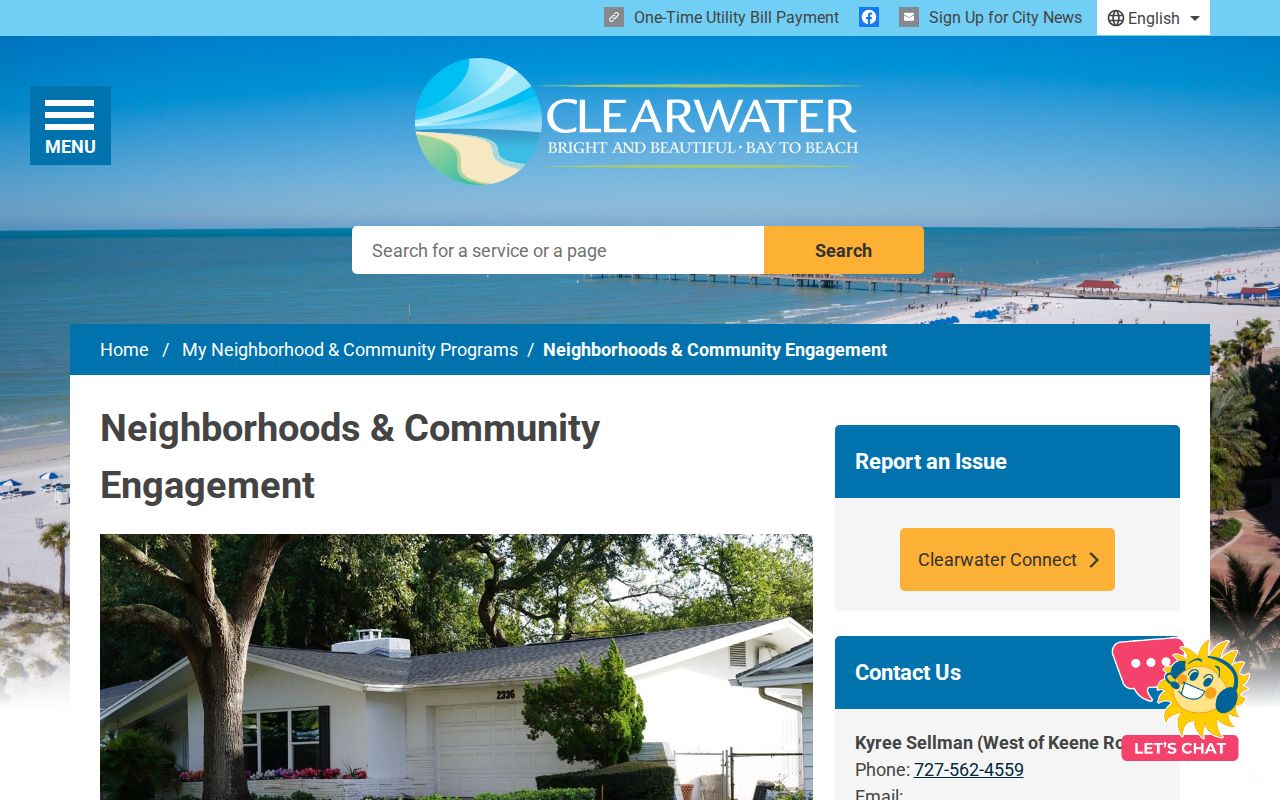
Member lists and block-watch rosters remain private unless a group chooses to publish them. Historical counts or directories should not be treated as current rosters.
Clearwater Blocks Cross City Lines
A Clearwater postal label does not guarantee that land is inside city limits. PCPA Current Tax District codes CW, CWD, or CWDO indicate Clearwater, while the city's annexation GIS maps enclaves and agreements to annex. Two close parcels can therefore use the same postal city but have different permitting offices or services. This is a geography issue, not an error in either address.
Check jurisdiction parcel by parcel before searching city permits or code cases. The distinction matters most near unincorporated pockets. Keep the postal address, PCPA tax district, and association boundary as three separate fields.
Note: Association boundaries, postal service areas, and municipal limits answer different questions and should never be merged into one neighborhood boundary.
Clearwater Block Work Records
Clearwater Accela records can add permits, planning matters, code cases, business tax records, applicants, work descriptions, inspection status, and attachments around a block. They help date visible changes. They do not establish continuous residence. Clearwater also changed its code-dashboard address matching to PCPA parcel data in April 2025, making the parcel identity especially important when comparing city and county results.
Search each address with as little text as needed and check unit numbers where relevant. If the portal fails, request a specified record through the City Clerk's Records Support Center, which allows an anonymous request, or ask at a city facility. Treat applicant, contractor, or business contact addresses as affiliations, not proof that the person lives beside the project.
Code files require extra care. Florida generally limits anonymous code complaints under section 162.21, except for an imminent threat, so public case material may contain a complainant field. That does not turn the person into a verified resident of the block. Use the case to understand the reported issue and status. Do not republish personal details that add no value to the civic question, and verify any payment request through official Clearwater permitting contacts because the city has warned about phishing aimed at permit customers.
DOH-Pinellas location listings identify official local certificate counters that may support family research.
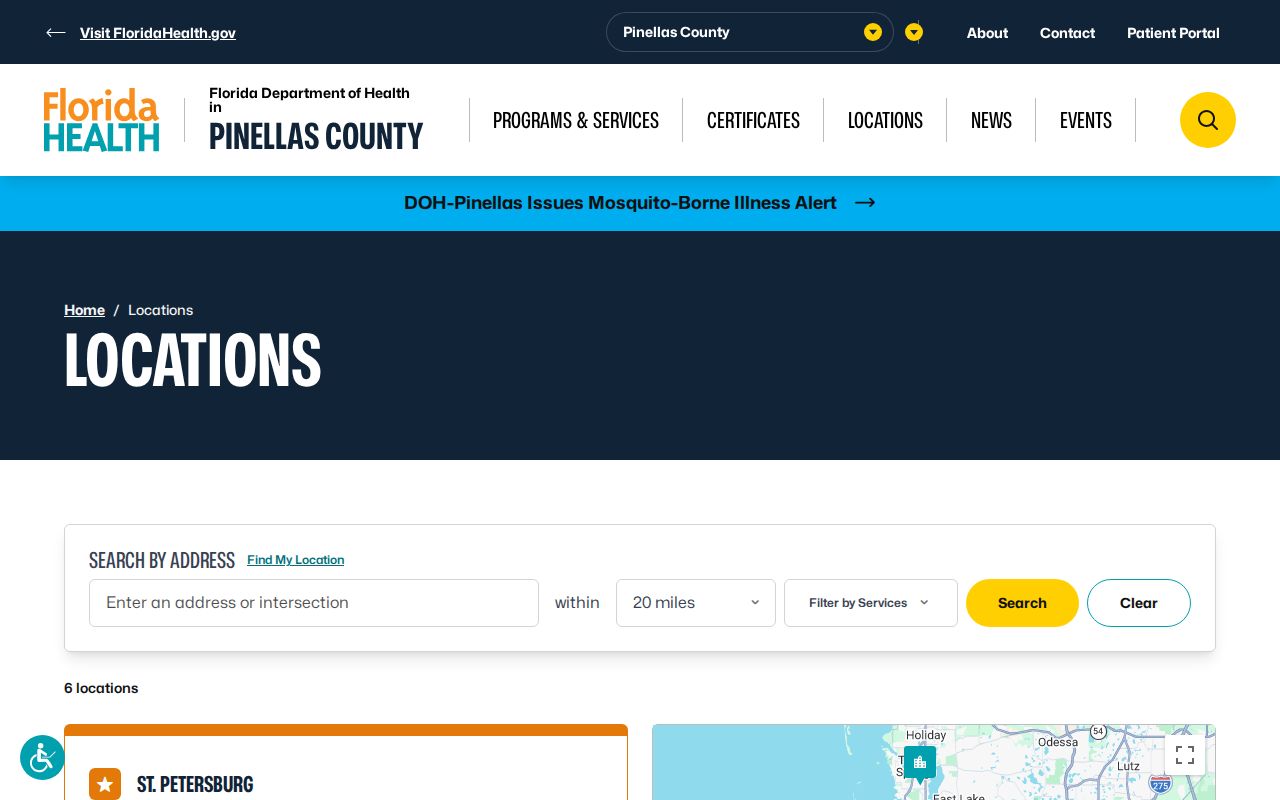
Certificate eligibility still applies, and a health-office location is not a neighborhood directory.
Historical Clearwater Neighbors
Polk criss-cross sections place streets and house numbers in order, often listing an occupant or business. They can rebuild an earlier Clearwater block more directly than owner records. The digitized Clearwater selection covers 36 verified editions from 1914 through 1979, but years are missing and titles shift among Clearwater, vicinity, Pinellas County, Dunedin, and Largo. Scan adjacent locality sections before deciding a household disappeared.
Clearwater Sun microfilm from 1925 through 1989, Pinellas Memory, yearbooks, and community collections can add names and context. A historical street-section entry should be cited with volume, year, page, and exact address. It reflects a publication date, not the present block.
Clearwater Records or Compiled Leads
Official rolls are narrow but accountable to a named custodian. Commercial neighbor tools combine data from many places, may merge people, and often lag behind moves or corrections. Use compiled results only as leads, then return to the current parcel, deed, voter, or city record.
| Source type | Strength | Key limit |
|---|---|---|
| Official parcel and deed rolls | Current custodian and recorded parcel identity | Owners are not a complete household |
| Official voter or permit data | Defined fields and legal access rules | Coverage is limited and protected records stay hidden |
| Commercial compiled leads | May suggest another spelling or prior address | Can be stale, merged, or unsupported |
Ask what the record proves. A parcel roll proves an assessed ownership record; it does not prove every Clearwater neighbor at the address.
Confirm Clearwater Parcel Owners
After mapping the block, confirm each owner in PCPA Quick Search. Record the situs address, owner name, mailing address, homestead information when displayed, STRAP, short legal description, and last deed. The 18-digit STRAP is the stable parcel key. The legal description ties the land to deeds, while the mailing address tells only where tax correspondence goes.
Open the last deed if an ownership match matters. The Clerk instrument can confirm grantee names and legal description. When an online page is incomplete, PCPA has public counters at 315 Court Street and 29269 US 19 North, phone 727-464-3207. A request for a historical assessment snapshot should include the STRAP and tax year.
Privacy for Clearwater Neighbors
Public rolls leave major gaps by design. Utility customer data, delivery data, DMV addresses, private civic rosters, renters not named in public records, unregistered household members, and protected addresses are not a block directory. Florida's Address Confidentiality Program supplies substitute addresses for eligible participants, and listed high-risk professionals may request suppression from individual custodians. A protected omission must remain an omission.
The Florida voter privacy page shown below explains which voter fields are public and which stay confidential.
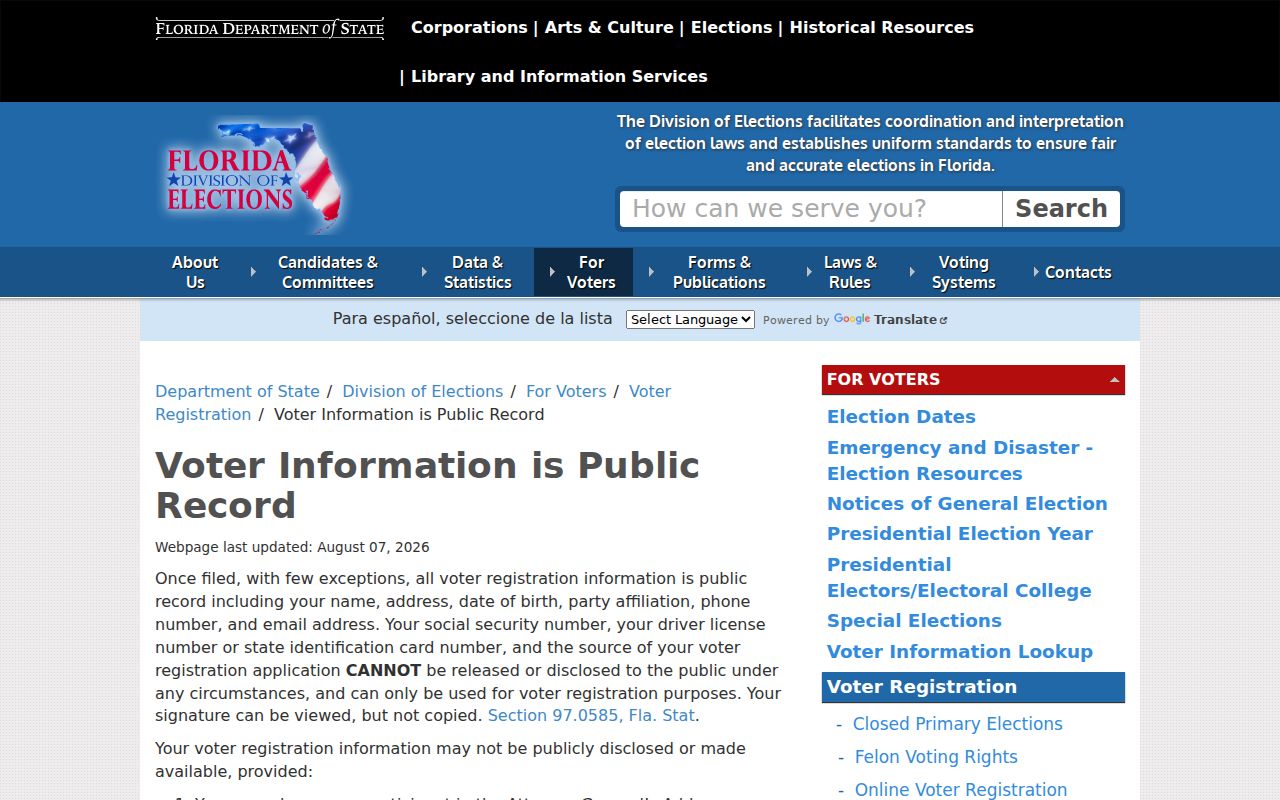
Use the custodian's current output as the boundary. Do not infer a hidden address from relatives, parcels, or older lists.
Florida Corrections provides its own offender search for state custody and supervision records.
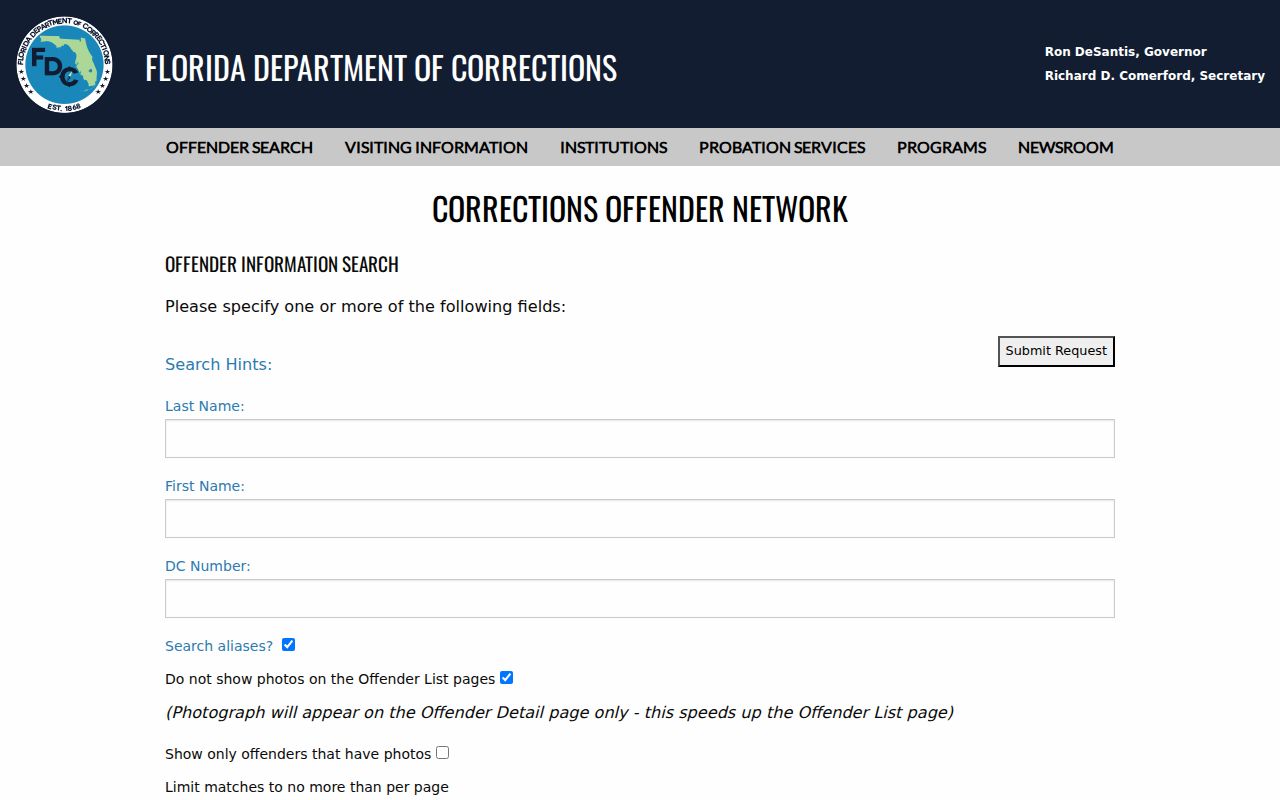
It is a dated public-safety record, not evidence about other people who live nearby.
Lawful use. Research Clearwater neighbors for civic contact, reconnection, or personal safety awareness. Never use public details to watch, intimidate, threaten, or harass anyone.